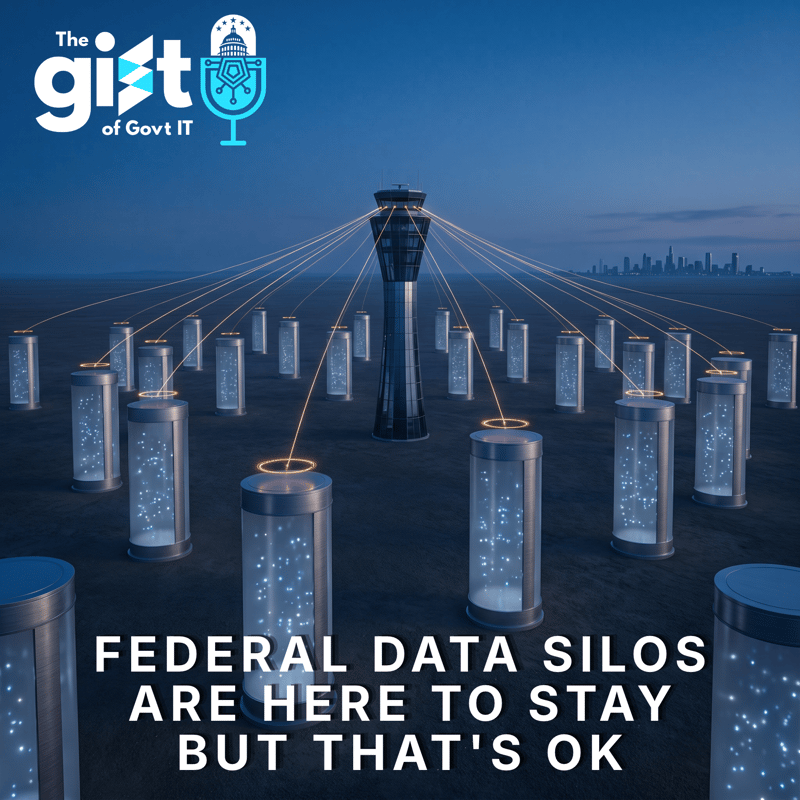
Most data teams spend more time keeping the stack alive than using the data in it. Swish VP of Data and AI Todd Boetticher steps into the co-host chair alongside Brian to welcome Rick Rosenburg, head of public sector at The Modern Data Company. Rick explains how reach data where it rests instead of moving it, how it metadata scores data its owners never have to share, and why a bounded semantic layer keeps large language models grounded and every answer auditable. Todd adds a warning for anyone building AI on agency data. A global credential behind a chatbot can hand user the keys to everything.
Then the conversation turns to speed. Modern reached FedRAMP High in about five months by building on Second Front's Game Warden platform and inheriting most of its security controls, then landed on dozens of contract vehicles within months through Carahsoft. Rick and Todd explain why data silos aren't disappearing but are getting easier to access securely, when commercial past performance counts, and why startups are often better off subcontracting first. Plus, Monday-morning advice to start with the problem, demand answers that are fast and auditable, and take the fast lanes wherever they exist.Featured Guest and Guest Co-Host
• Rick Rosenburg, Head of Public Sector, The Modern Data Company
• Todd Boetticher, Vice President of Data and AI, Swish
Getting Into the Federal Market Faster
• DataOS achieves FedRAMP High through Second Front's Game Warden
Data Architecture and AI Concepts Discussed
• Model Context Protocol (MCP)
The Monday-Morning Takeaways
• Demand answers faster and make sure the data and every AI-driven decision are trusted and auditable
• Start with the problem and work backward instead of starting with the technology
• Fix the data foundation before adding AI, or it will cost more and add risk
• Use the fast lanes like Second Front to reach an ATO and production quickly
The Hosts and Show
• Swish